

Celebrating Juneteenth in Uptown — where free Black communities built a legacy that still stands.
A Day of Freedom
Juneteenth marks June 19, 1865 — the day enslaved people in Texas finally learned they were free, more than two years after the Emancipation Proclamation. It is the oldest nationally celebrated commemoration of the end of slavery in the United States, and in 2021 it became a federal holiday.
But Juneteenth has never only been about a date. It is about what freedom made possible: family reunited, churches founded, schools opened, businesses built, and neighborhoods that became home. It is a celebration of resilience, culture, and the future each generation builds for the next.
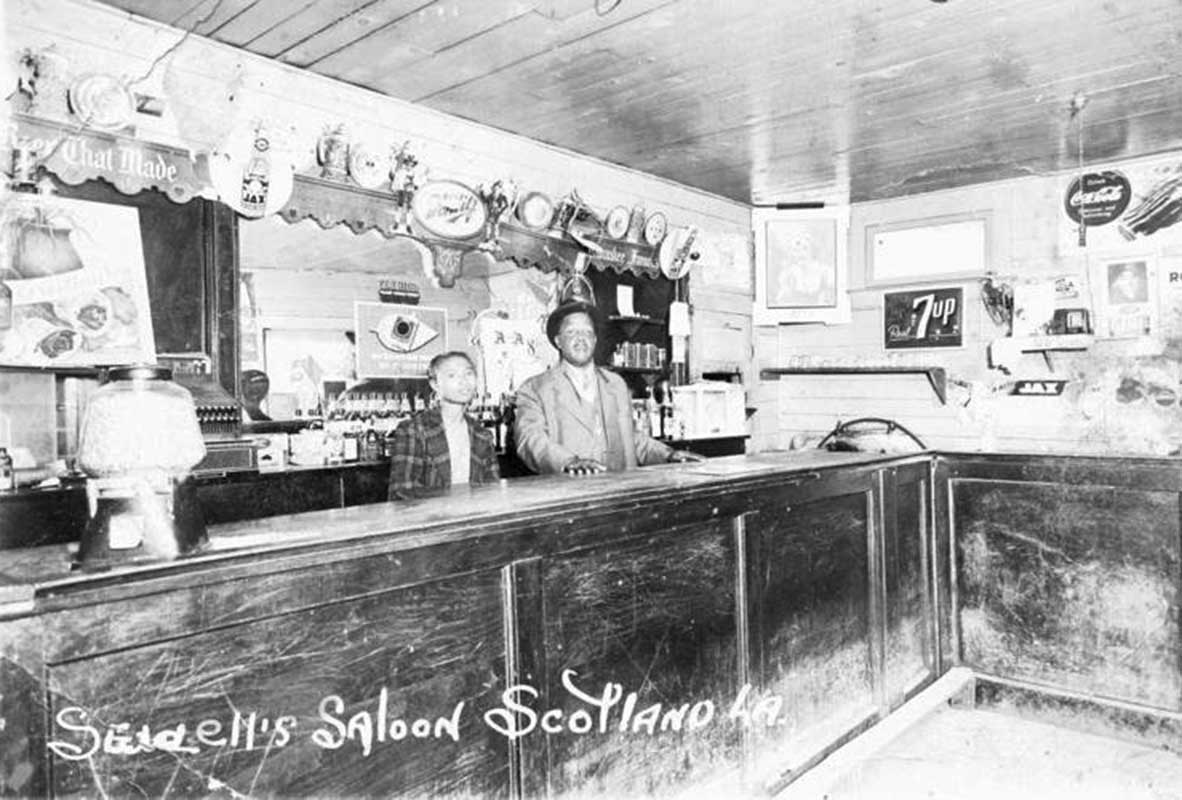
Photo from Images of America: Scotlandville, provided by DOUGLAS & ETHEL SEWELL — By the 1940s, entrepreneurs, such as Vanderbilt and Ellen Sewell, offered Scotlandville residents access to groceries, sundries, fuel, housing, entertainment, like Sewell’s Saloon.
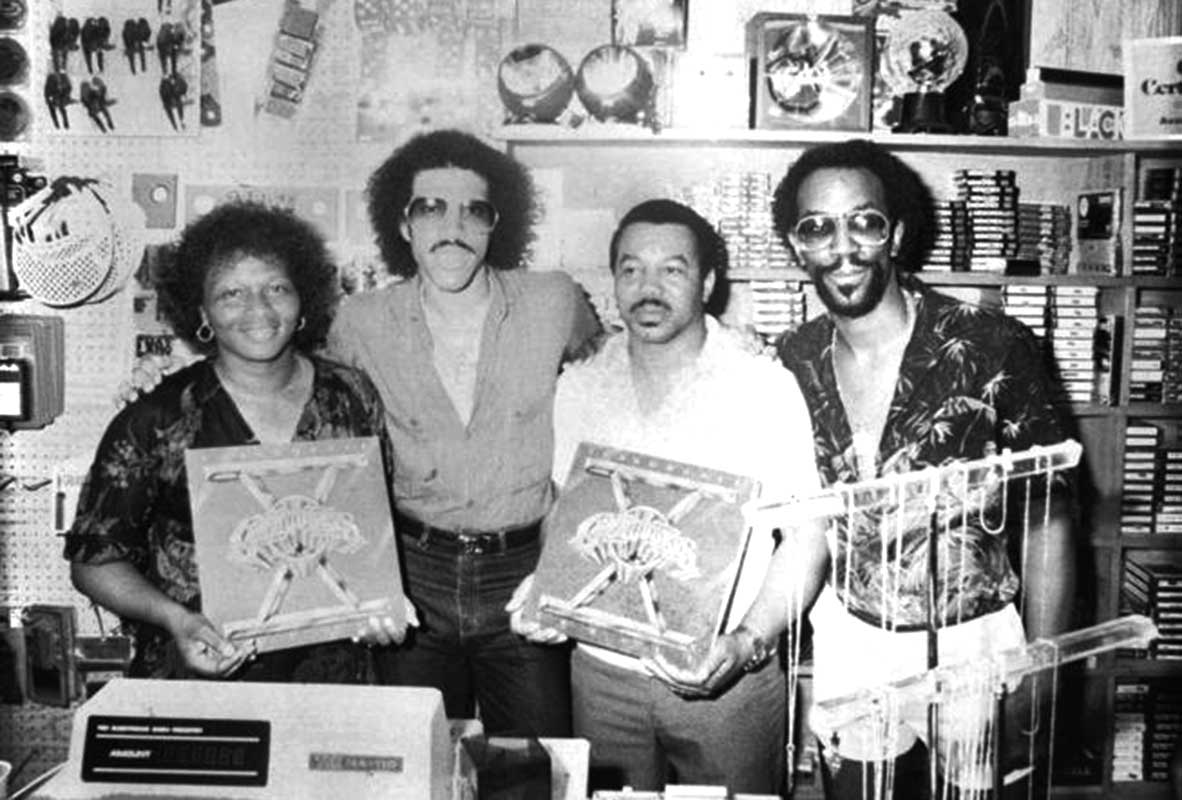
Photo from Images of America: Scotlandville, provided by KELLEE BOWIE — Herman ‘Poochie’ Bowie opened the first black-owned music store in the Baton Rouge area, and brought lots of recording artists to the community. Pictured are, from left, Bowie’s wife, Lucille Jackson, The Commodores’ Lionel Richie, Bowie and The Commodores’ Thomas McClary.
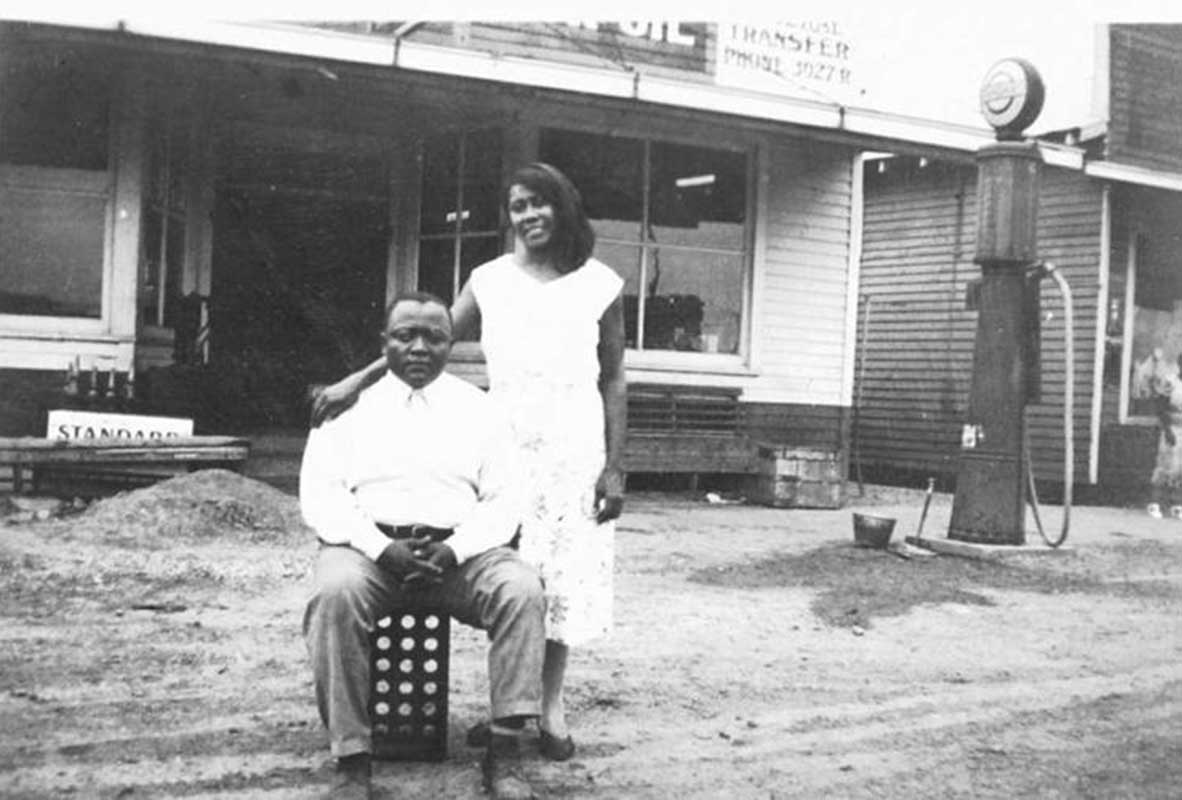
Photo from Images of America: Scotlandville, provided by BEVERLY A. VINCENT — In 1919 Arteal and Amanda Kelly opened in Scotlandville the first black-owned grocery store, the centerpiece of a larger complex that included a gas station and post office
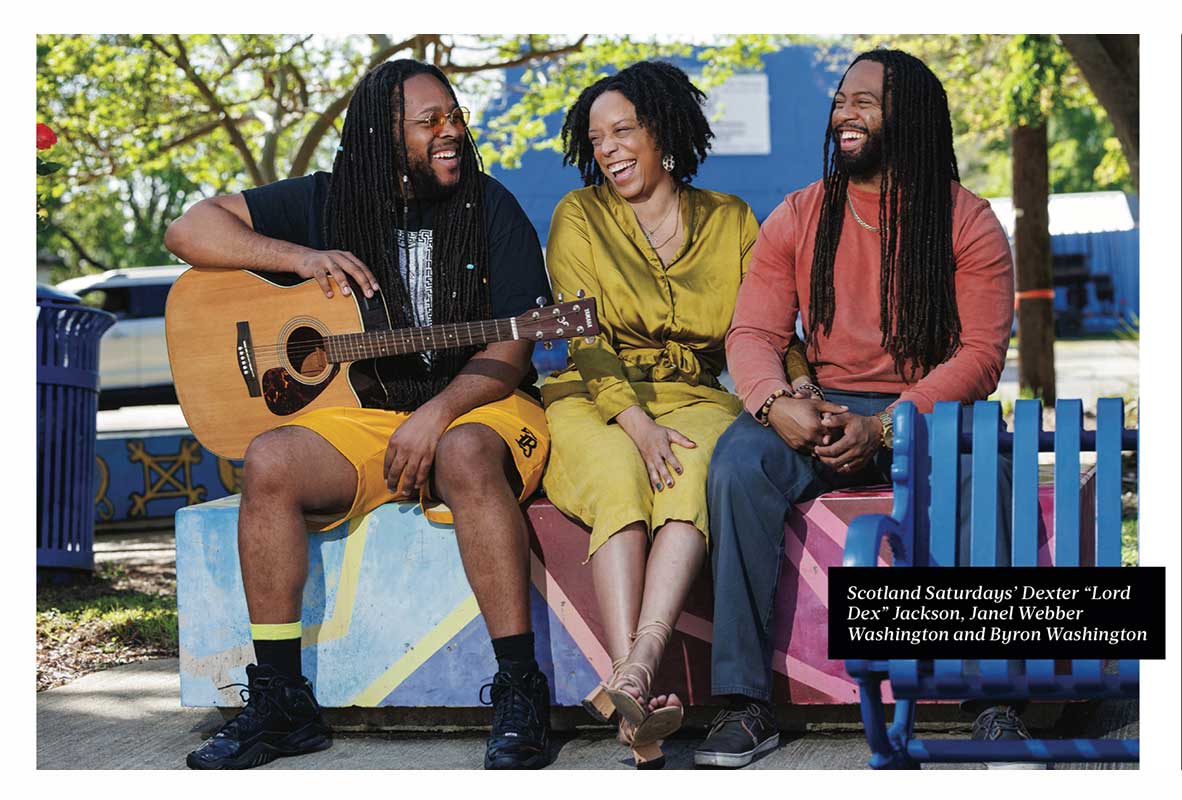
Photo from 225 Magazine: Dexter Jackson, Janel Weber Washington, and Byron Washington. Hosts of Levitt AMP concert series and Founders of Scotland Saturdays
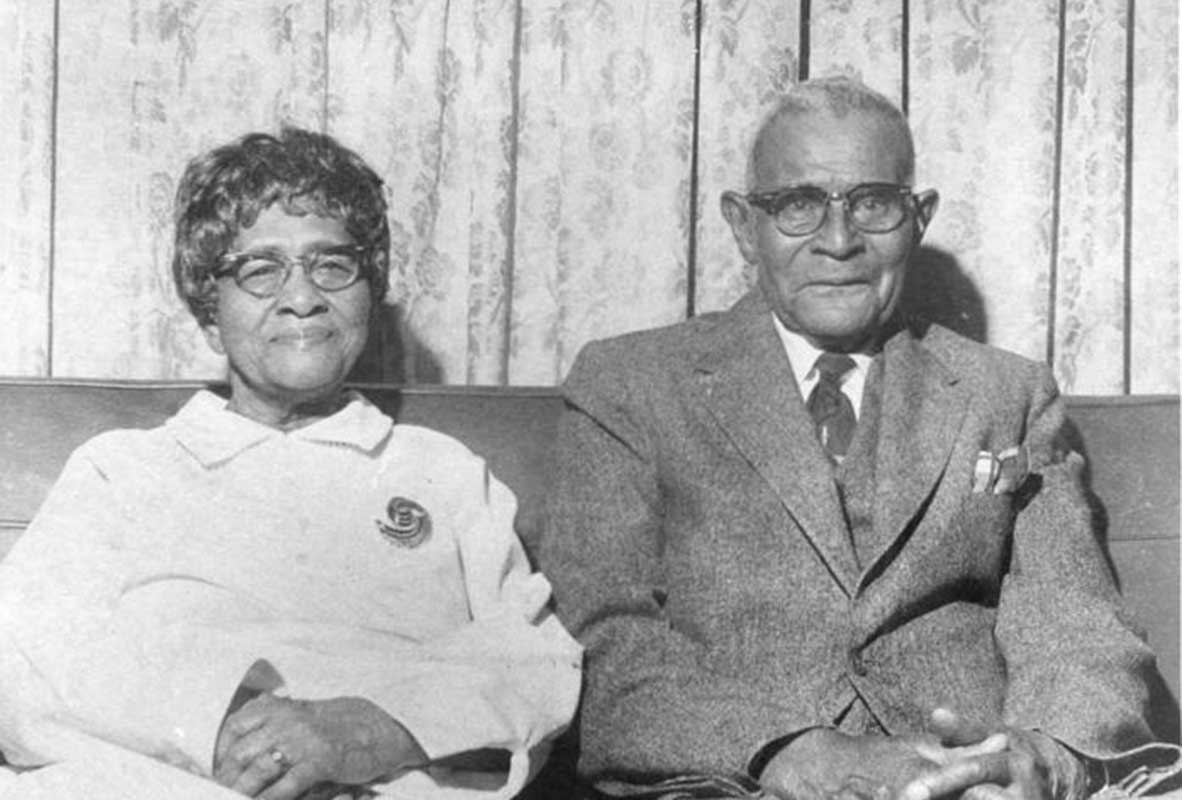
Photo from Images of America: Scotlandville, provided by JULIA BRADFORD MOORE — Mary and James Bradford were founders of Camphor Memorial United Methodist Church in Scotlandville. In 1917, the 12 founders met in the Bradfords’ home on Marsh Street
Built by Community, Still Standing
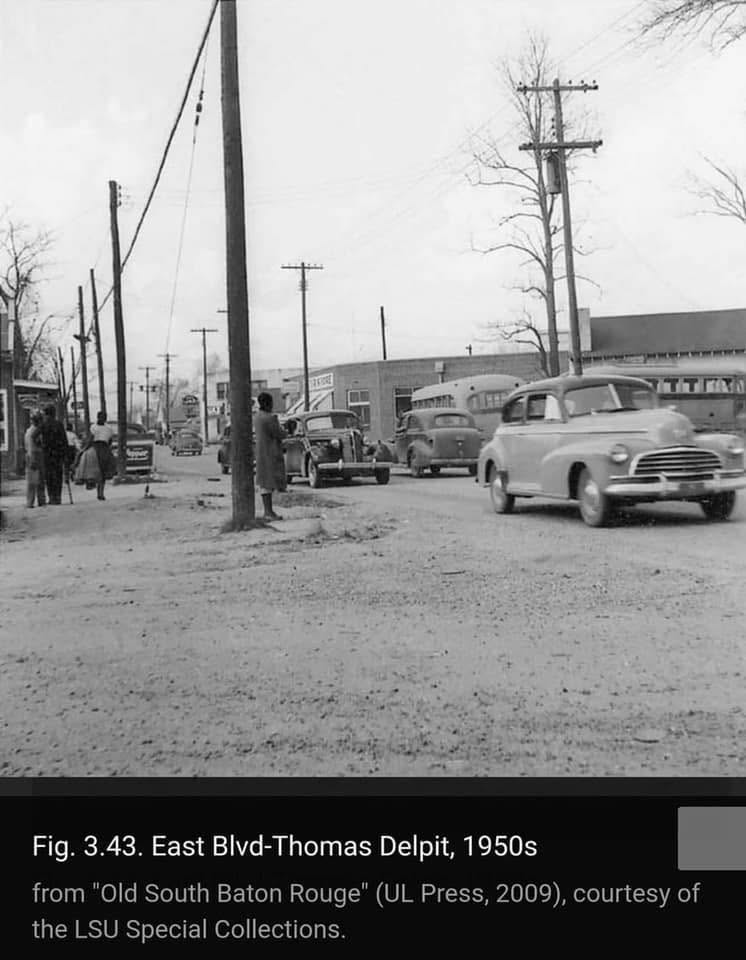
Uptown, in South Baton Rouge, is living proof of what freedom built. When Black families could not stay, eat, or gather where they pleased, they created their own thriving world right here — and much of it still stands today.
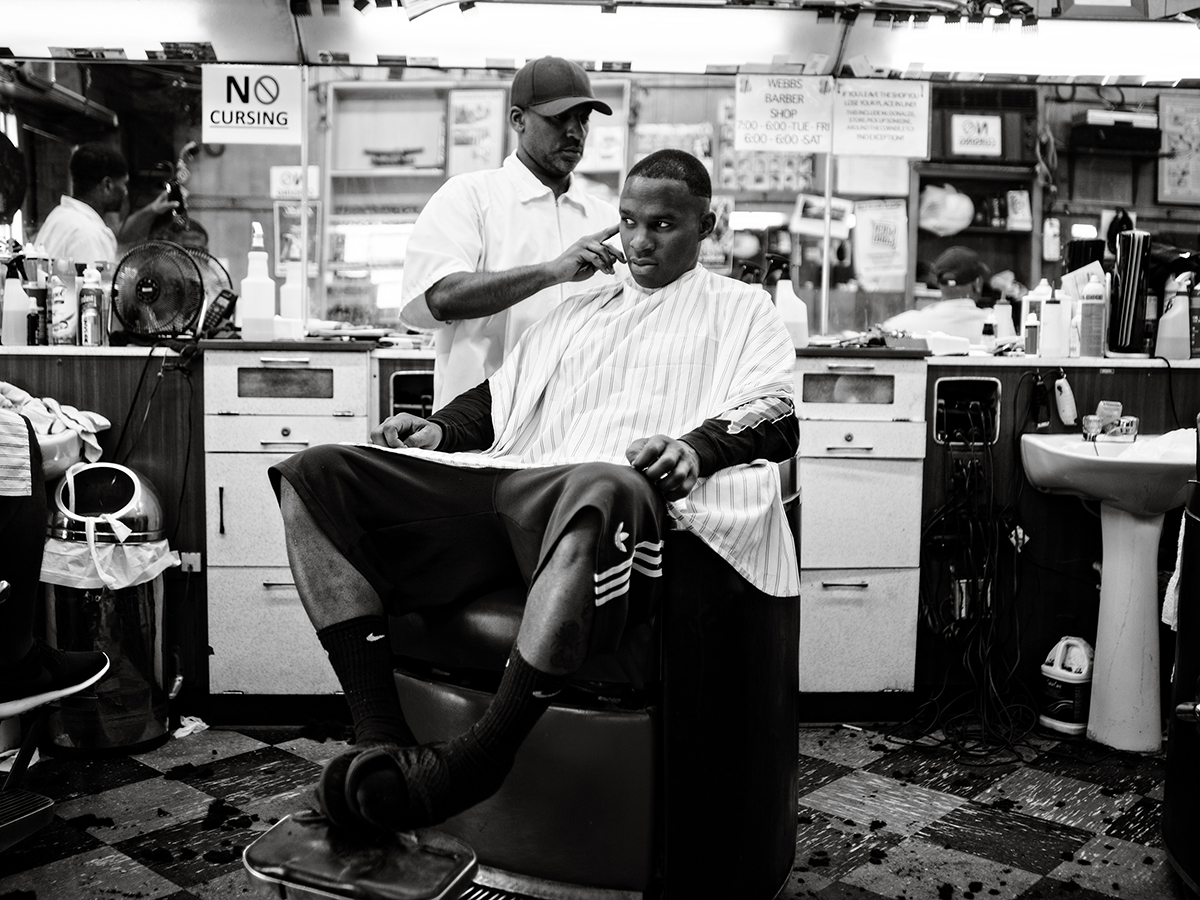
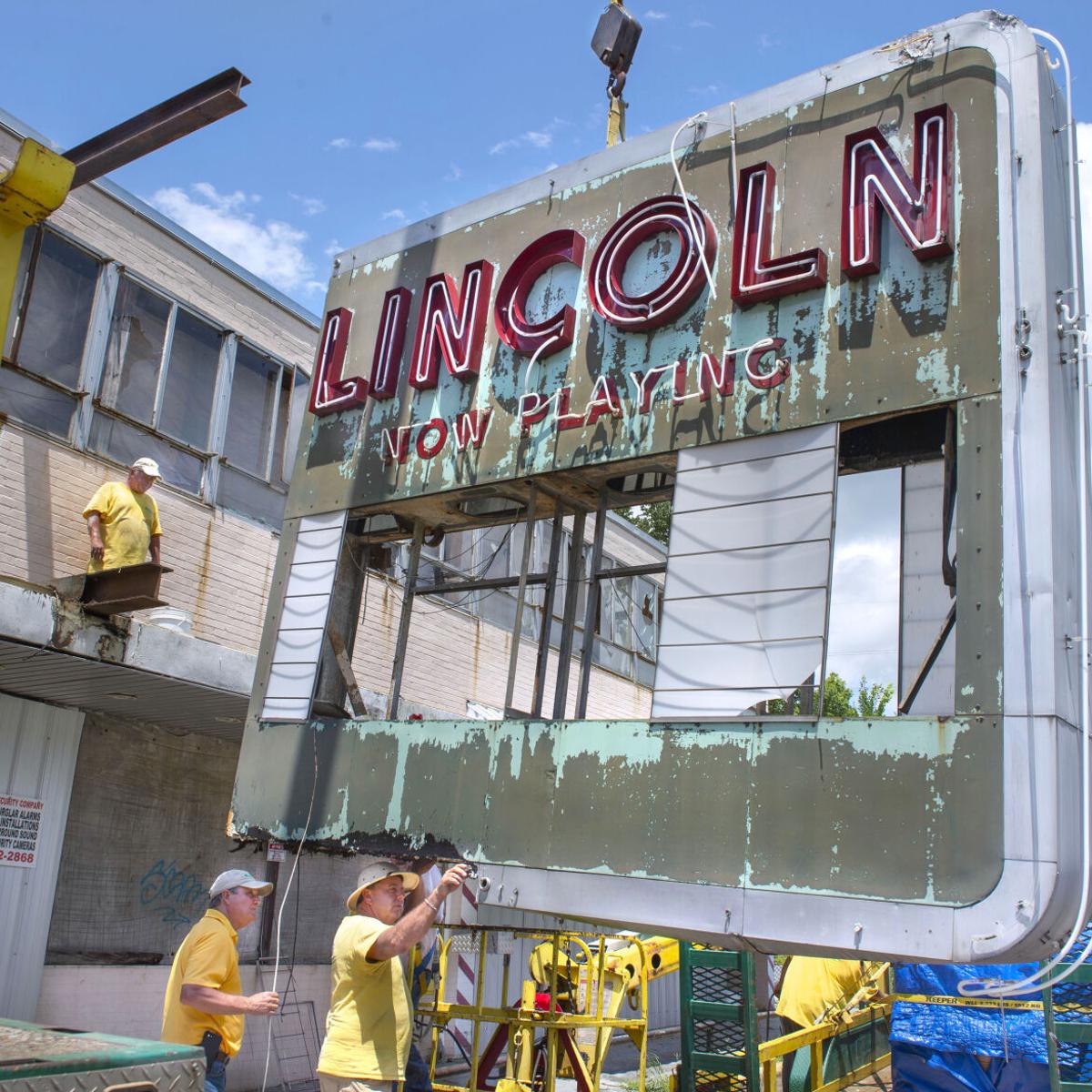
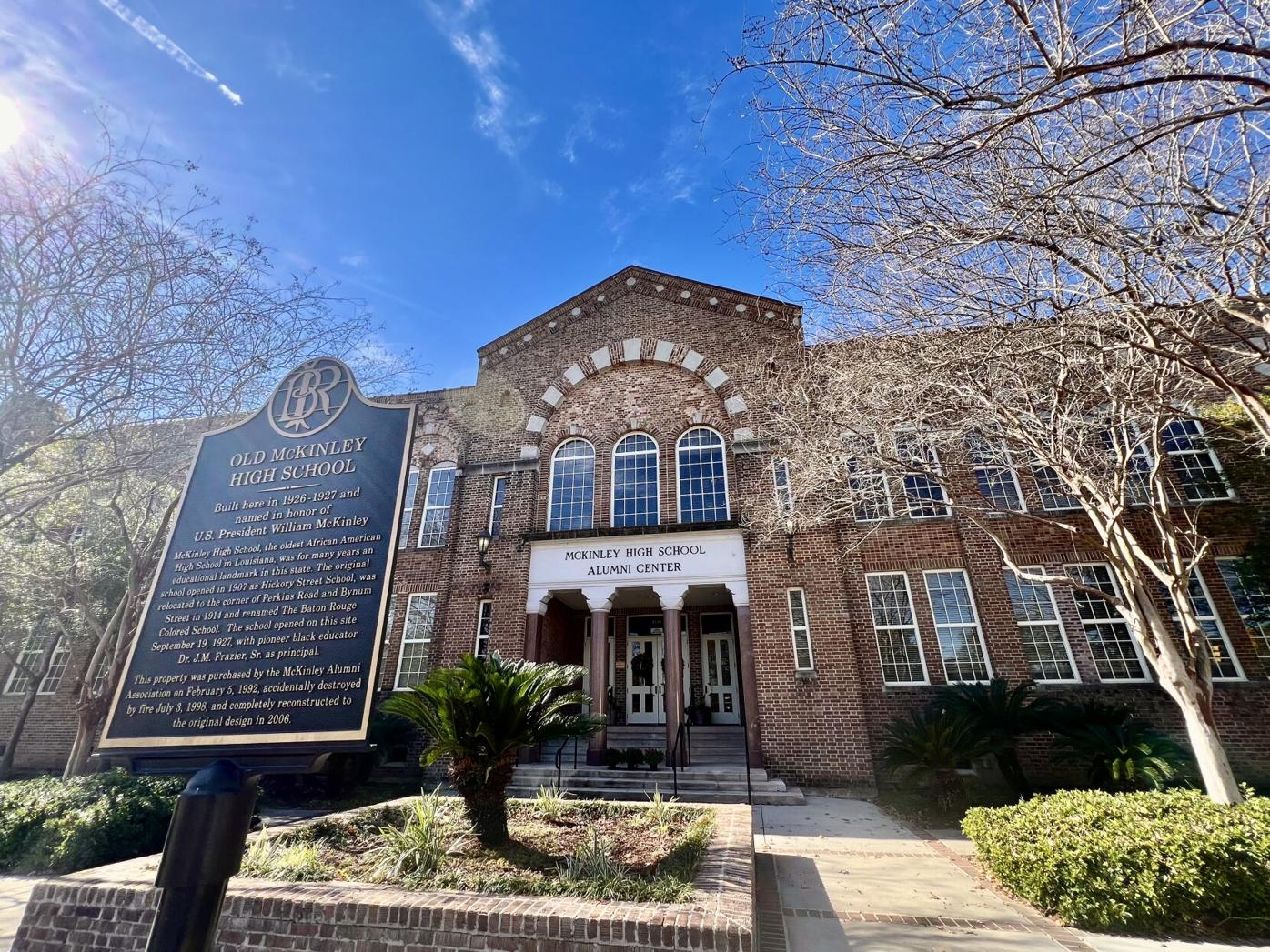
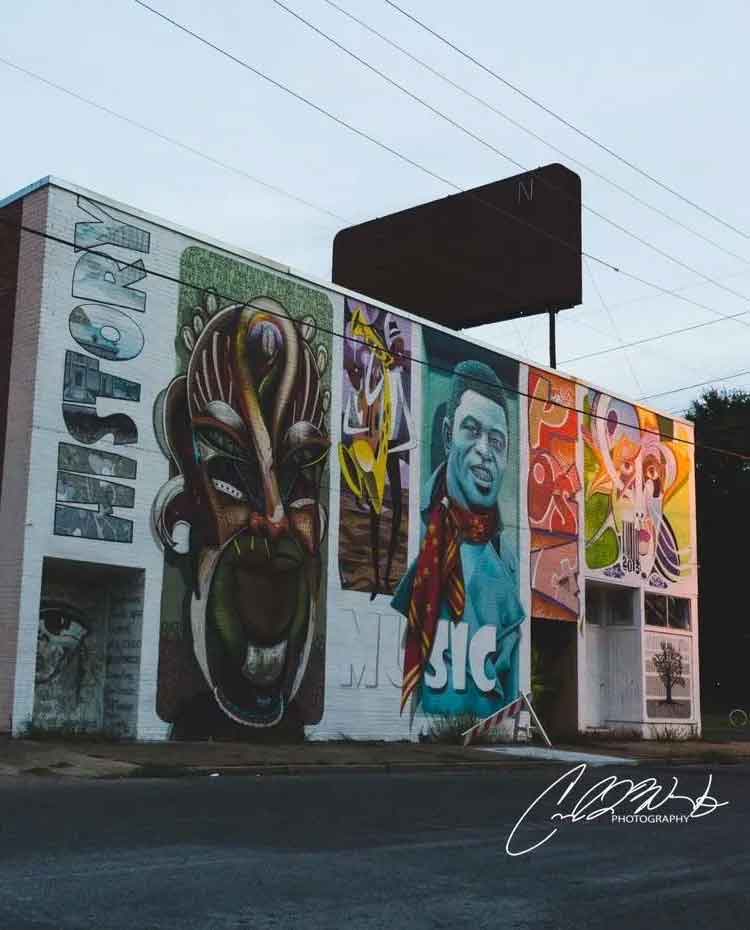
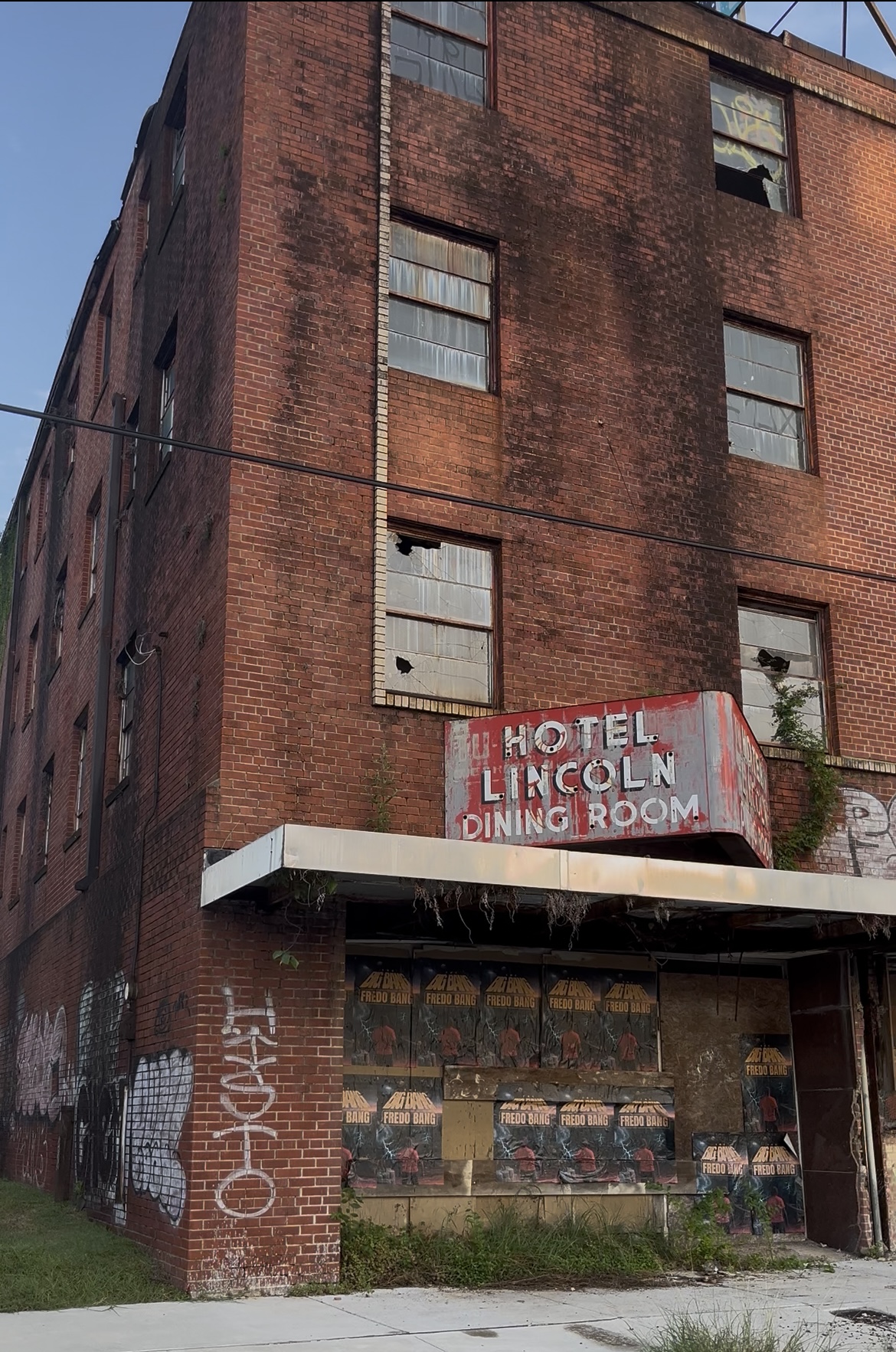
Hotel Lincoln, the first Black-owned hotel in the area, opened in 1955 and welcomed travelers turned away elsewhere; it was a trusted stop listed in the Green Book, the guide that helped Black travelers move safely through a segregated South. Around the corner, the Lincoln Theater drew Louis Armstrong, James Brown, and Aretha Franklin to its stage — and upstairs, its meeting rooms helped organize the 1953 Baton Rouge bus boycott, the protest that became the model for Montgomery two years later. McKinley, the city’s first high school for Black students, sent generations of leaders into the world. Churches, barbershops, social clubs, and gardens filled the blocks in between.
Uptown has the history, the talent, and the momentum to keep thriving. What it needs is what it has always had — the practice of community, neighbors who show up for one another, together.
Walk the Legacy. Win the Day.
QUICK DETAILS
- When: Juneteenth, Friday, June 19, 2026
- Where: Starts in Uptown, South Baton Rouge — finish line at the McKinley Alumni Center
- Who: Open to families, friends, and teams of all ages
- How long: About 45 minutes · 6 stops · 160 points to win
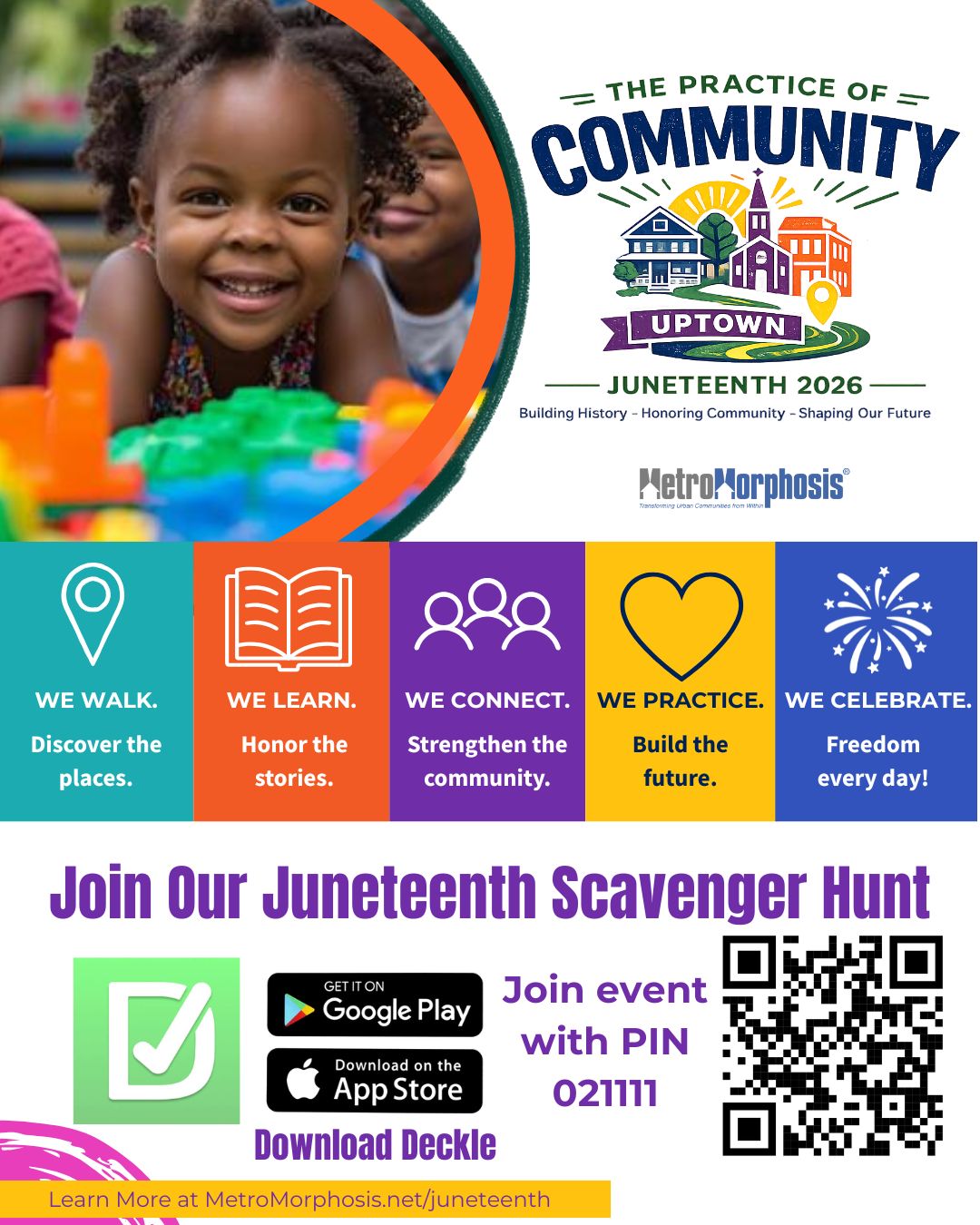
HOW TO PLAY (Two Options - Same Hunt)
- Play on theDeckle app (download)
- Play in your web browser (no download)
Game PIN: 021111
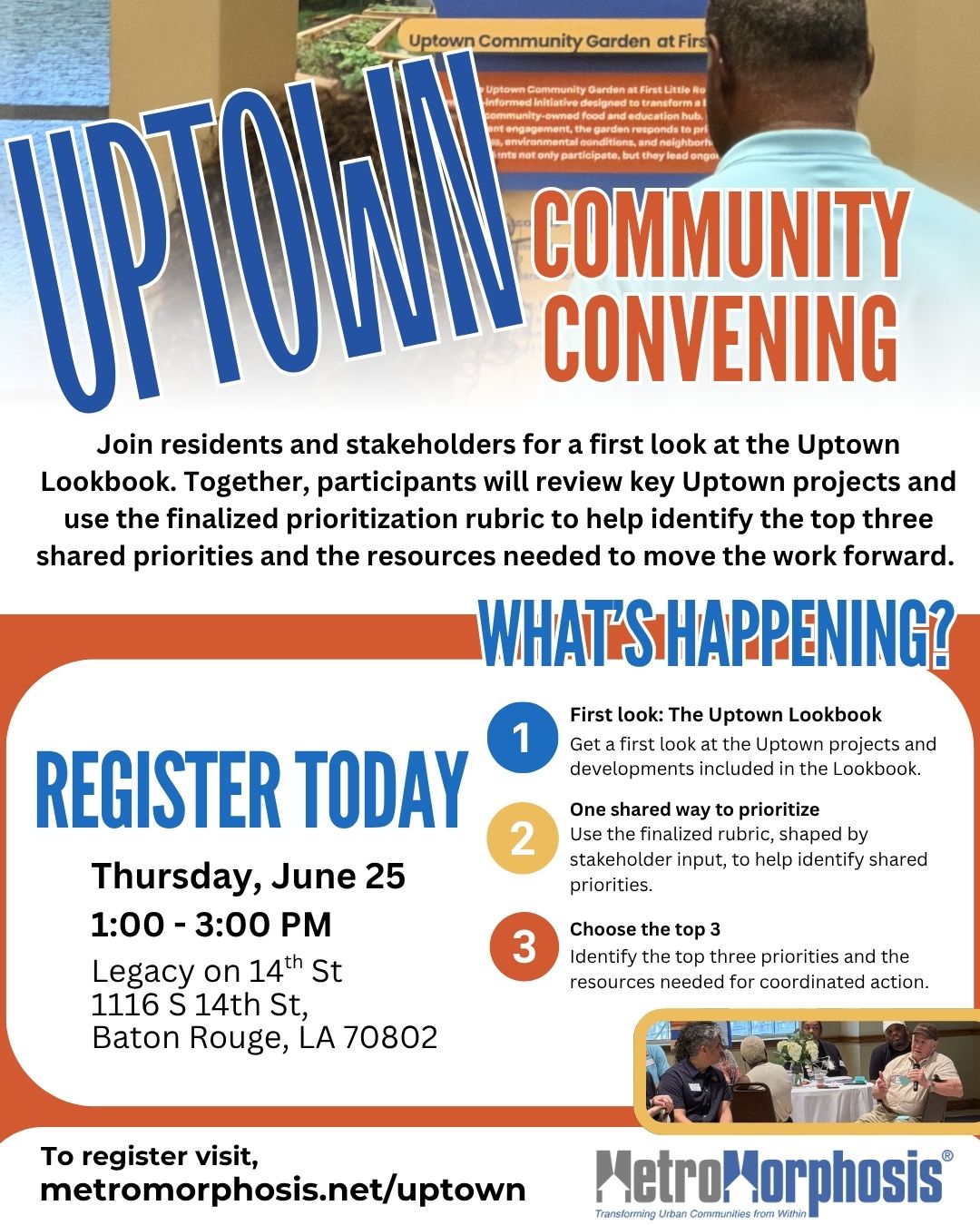
The Story Continues June 25
QUICK DETAILS
- When: Thursday, June 25, 2026 · 1:00–3:30 PM
- Where: Legacy on 14th Street
- Who: Uptown residents, stakeholders, community partners, and project leads
The Practice of Community
Building History – Honoring Community – Shaping Our Future
Powered by